
My Talking Animal 2
Finger RhythmMusic
3.39.00 Reviews
- Version
- 1.0.4
- Installs
- 100.00K
- Age Rating
- Everyone
Screenshots
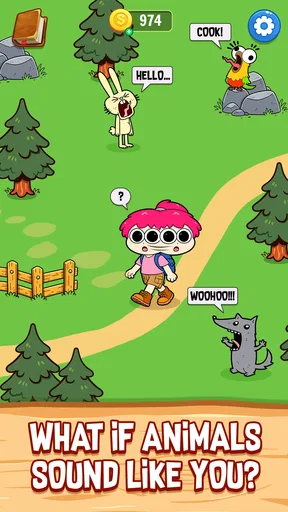
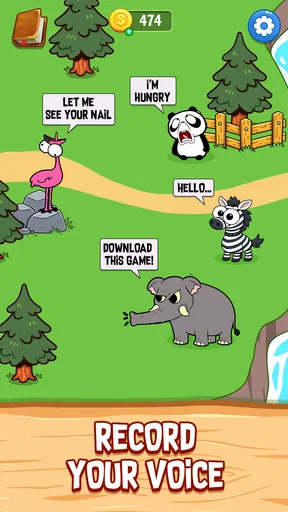
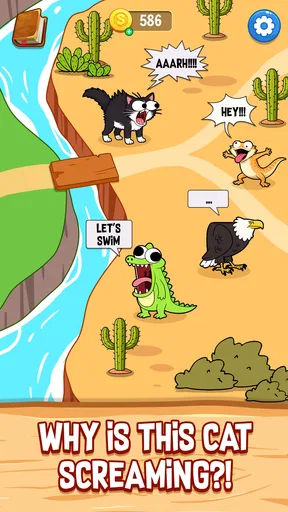
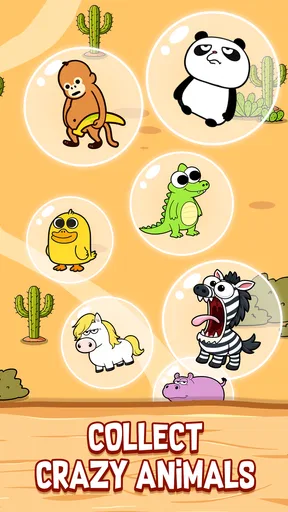
Our Review of My Talking Animal 2
 Analysis by Appyee
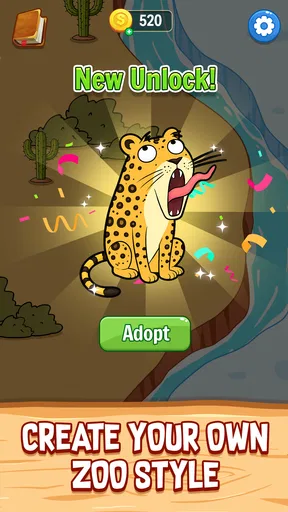
My Talking Animal 2 is a free music game from Finger Rhythm that presents itself as a light, cheerful animal-collecting experience. I approached it as the sort of game someone might open for a few minutes between tasks, rather than as a deep strategy title, and that is still the best way to understand its appeal. The central idea is simple: build a zoo, gather cute animals, and let the activity grow while you check in regularly.
That simplicity is both its greatest strength and its main question mark. The first sessions are easy to understand, friendly in tone, and suited to players who do not want a complicated tutorial or a demanding competitive system. The more important issue is what happens after the initial charm wears off. An idle tycoon game needs to make returning feel worthwhile, not merely automatic, and my view is that this one works best for casual players who enjoy gradual progress more than constant novelty.
What the first week feels like
The opening appeal comes from the combination of animals, collection, and visible growth. Building a zoo gives each short session a clear purpose: collect something, improve the environment, or check how far the operation has advanced. Even without treating it like a serious management simulator, I found that the theme gives ordinary idle progress a little personality. Numbers going up are easier to care about when they are connected to a growing group of animals.
The music category also sets an expectation of a relaxed, accessible experience rather than a complex business simulation. I would recommend starting with short sessions and resisting the urge to treat every available action as urgent. The game is more pleasant when I let the zoo develop at its own pace. Trying to optimize every moment can make a gentle game feel like a chore, especially when the main pleasure is watching a small collection become more complete.
For a child or younger player, the Everyone age rating makes the presentation approachable. Adults who want something harmless to dip into may also appreciate that the premise is immediately understandable. I would still play alongside a child at first, not because the concept is difficult, but because any idle game can encourage repeated checking. Setting a simple routine—perhaps looking in after school or during a quiet break—helps keep the game recreational instead of turning it into a constant interruption.
One useful early habit is to decide what kind of player you are before investing much time. If you enjoy collecting every animal and seeing a space gradually fill out, the first week has a natural rhythm. If you prefer games where every decision changes the outcome, the early loop may feel too passive. That distinction matters more here than the cute presentation. The animals can attract you, but your preferred style of play determines whether the attraction lasts.
I also found that the zoo theme makes progress easier to read than an abstract idle counter. A new animal or a more developed area gives the player a visual reason to return. That is a small but meaningful design advantage over idle games that present growth almost entirely through menus. The trade-off is that visual progress can create a strong first impression even when the underlying routine remains fairly repetitive.
Who gets the most from the opening
This is a good starting point for someone new to idle tycoon games. There is no need to learn a complicated economy before enjoying the basic loop. It can also suit players who like collection games but do not want the pressure of real-time competition. A short check-in while waiting for transport, taking a coffee break, or winding down before bed is a realistic use case.
It is less suitable for anyone looking for a rhythm game with demanding timing, a story-led animal adventure, or a management title built around difficult choices. The music label may attract players expecting active musical play, but the experience is better approached as a relaxed animal-themed idle game. I would not choose it as a substitute for a dedicated rhythm game, nor would I expect it to replace a detailed zoo simulator.
The developer, Finger Rhythm, has kept the concept focused enough that the first sessions do not feel overloaded. That focus helps the game communicate quickly, but it also means the experience has fewer obvious layers to discover at the beginning. For me, the first week is strongest when I want comfort and clarity, not surprise.
What remains useful after the novelty
The month-to-month question is whether the zoo becomes part of a routine or simply becomes another icon I stop opening. Idle games depend on recurring value, and that value usually comes from a satisfying cycle of returning, collecting, improving, and seeing a meaningful result. My Talking Animal 2 has a natural foundation for that cycle because the zoo gives progress a persistent home rather than presenting disconnected rewards.
To make the routine last, I would use a deliberate check-in pattern instead of opening the game whenever a notification or impulse appears. A morning visit can handle collection and planning, while an evening visit can be used to review what changed. This approach turns the game into a small daily ritual and also exposes its limits quickly. If the routine still feels pleasant after several days, the game has a chance of earning lasting space. If it already feels like administrative work, more frequent checking will not solve the problem.
The strongest long-term use case is for players who enjoy incremental goals. A zoo can provide a sequence of modest targets: adding another animal, improving the overall collection, or reaching a new stage of development. These goals do not need to be dramatic to be effective. In fact, the low pressure is part of the attraction. I can play while listening to something else or during a short pause without needing to remember a complicated plot.
There is an important trade-off here. Idle progress is convenient, but convenience can reduce involvement. When much of the advancement happens between sessions, the player may feel rewarded for returning without feeling responsible for the result. That is satisfying for a few minutes, but it may not create the same attachment as a game where skill or planning produces a visible breakthrough.
Compared with a traditional zoo management game, this one is easier to maintain and less demanding, but it offers less room for detailed planning. Compared with a collection game built around active exploration, it is calmer and more predictable, but likely less surprising. Compared with a dedicated music game, it asks less of the player’s timing and attention. I see that as a clear positioning choice rather than a flaw, provided the player wants a soft, incremental experience.
The current version is 1.0.4, and that makes it sensible to keep expectations centered on the experience available now rather than imagining a larger future system. I would judge it by whether the existing loop remains enjoyable, not by hoping later updates will add the depth I personally want. For a casual player, the current simplicity may be exactly the point.
How to keep the routine from becoming wasteful
My practical advice is to choose one priority per session. If I try to collect, reorganize, optimize, and chase every possible improvement at once, the game feels busier than it needs to be. Focusing on one small objective makes the visit feel complete and prevents the zoo from becoming a list of unfinished errands.
I would also avoid measuring enjoyment only by how quickly the zoo grows. The better question is whether returning feels pleasant. This is a useful test for any idle game, but it is especially relevant here because the animal theme can make progress look more exciting than the underlying interaction really is. If the player enjoys the collection itself, the game has a durable reason to stay installed. If not, faster progress will probably only delay boredom.
Another overlooked use case is shared casual play. A parent and child can look at the growing zoo together and decide which animal or improvement to pursue next. That is different from a competitive game because the conversation matters more than winning. The game can support a small shared ritual, although I would keep sessions bounded so that the routine does not become endless device time.
Where maintenance starts to feel like work
The maintenance burden in an idle tycoon is rarely about difficult controls. It is about remembering to return, checking progress, and deciding whether the next small action is worth the attention. My Talking Animal 2 is at its best when those tasks remain light. Once I start opening it out of obligation, the cute setting no longer compensates for the repetition.
Players should ask themselves how much passive progress they actually enjoy. Some people like returning to a developed space and collecting the result of time away. Others prefer to be actively involved in every meaningful change. The former group is likely to find the maintenance satisfying; the latter may feel that the zoo is moving without them, leaving too little to do when they arrive.
There is also a difference between a game being easy to maintain and a game being rewarding to maintain. Easy maintenance means a check-in takes little effort. Rewarding maintenance means the check-in produces a decision or discovery that feels worthwhile. The long-term strength of this title depends on how often its collection and growth loop delivers that second feeling rather than only the first.
For busy players, I would treat it as a background hobby, not a primary game. It can fit around work, study, or household tasks because it does not demand a long uninterrupted session. However, anyone who dislikes games that encourage repeated returns should skip it. The very structure that makes it convenient can feel intrusive to a player who wants a complete experience in one sitting.
The free price lowers the barrier to trying it, which is useful when deciding whether the loop suits you. It also means I would be especially careful about time rather than money: a free game can still cost attention. I would give it a few relaxed sessions, then decide whether the zoo is becoming a pleasant habit or merely another routine to manage.
Why fatigue can arrive
The most likely source of fatigue is repetition without enough personal meaning. Collecting animals is appealing at first because each addition feels like a small discovery. Later, the same action can become procedural if the player no longer feels curious about what comes next. The game therefore works better for people who enjoy completion and gradual accumulation than for players who need frequent mechanical reinvention.
The second source is passive play itself. An idle system can make progress feel generous, but it can also make the player’s input seem interchangeable. If I return and perform the same short sequence every time, the zoo may continue growing while my interest shrinks. That is not a problem for someone seeking a background distraction, but it is a real limitation for anyone expecting sustained engagement.
The animal theme can also create a novelty curve. Cute presentation is powerful during the first sessions, especially when paired with a growing collection. Over time, however, the theme has to be supported by satisfying decisions. If the player’s main motivation is simply that the animals look appealing, the experience may fade once the initial collection is familiar.
I would skip this game if my priority were deep optimization, strong narrative progression, competitive rankings, or demanding musical interaction. A more involved management game would be better for players who want complex trade-offs. A conventional rhythm title would be the better choice for someone who wants music to be the central skill. My Talking Animal 2 is not a universal replacement for either; it is a gentler alternative for a different mood.
The average rating is 3.5 from around eighty ratings, which suggests a mixed but meaningful early reaction rather than overwhelming agreement. I would read that as a reason to try the game personally instead of assuming the theme will suit everyone. Its free availability makes that decision easy, but the real test is whether the daily loop still feels inviting after the first burst of curiosity.
My long-term verdict
After looking beyond the first-week charm, I see My Talking Animal 2 as a modest, approachable idle zoo game rather than a deep music or management experience. Finger Rhythm has chosen a friendly premise that communicates quickly and works well for short sessions. The combination of animal collection and gradual construction gives casual players a clear reason to check in, especially when they enjoy seeing a personal space develop over time.
Its lasting value depends heavily on expectations. If I want a low-pressure companion game that I can visit briefly, the free entry point and simple zoo routine make sense. If I want every session to introduce a new challenge, the passive structure may become tiring. The game earns a place on my device when I treat it as a small habit, not when I demand the depth of a full simulation.
My recommendation is therefore specific: try it if cute animal collecting and slow tycoon progress sound relaxing, and give yourself a few days to judge the routine rather than the opening presentation alone. Keep sessions purposeful, use a schedule that fits your day, and notice whether returning feels like a treat or a duty. That approach reveals the game’s real strength without allowing the idle design to take over your attention.
For me, the verdict is cautiously positive for casual players and clearly limited for demanding ones. The key trade-off is simple: you gain an easy, friendly zoo to revisit, but you give up the depth and active decision-making found in more ambitious alternatives. If that exchange sounds fair, this game can remain a pleasant little background hobby. If it does not, the novelty of the animals is unlikely to be enough to secure a permanent place in your routine.
Privacy and Permissions
See what permissions an app requests and how it handles your data.
- Photos/Media/Files
- read the contents of your USB storage, modify or delete the contents of your USB storage
- Storage
- read the contents of your USB storage, modify or delete the contents of your USB storage
- Microphone
- record audio
- Wi-Fi connection information
- view Wi-Fi connections
- Other
- view network connections, pair with Bluetooth devices, full network access, change your audio settings, control vibration, prevent device from sleeping, Google Play license check
Verdict
Strengths of My Talking Animal 2
- Fun virtual-pet interactions suitable for short play sessions.
- Cute animal animations make the app appealing to younger players.
- Simple controls are easy for children to understand.
- Many activities help keep gameplay varied.
- Works well as a casual entertainment app.
Limitations of My Talking Animal 2
- Frequent ads may interrupt play, especially in the free version.
- Some content may require in-app purchases to unlock.
- Gameplay can become repetitive after extended use.
- May collect usage data depending on privacy settings.
- Requires regular attention to keep the virtual animal happy.
Similar Picks in This Category
View All
Tiles Hop Music & Ball Game
AMANOTES PTE. LTD.4.3

Magic Tiles 3™ - Piano Game
AMANOTES PTE. LTD.4.6

Real Piano
Bilkon3.7

Piano Game: Classic Music Song
Dream Tiles Piano Game Studio4.0

Smash Colors: Music Ball Rush
BADSNOWBALL HONGKONG LIMITED4.2

Piano Music Go-EDM Piano Games
Joy Journey Music Games4.5
Frequently Asked Questions
What is My Talking Animal 2?
My Talking Animal 2 is a virtual pet game in which you interact with a cheerful animated animal, care for its daily needs, and spend time playing together. You can talk to the character, watch it respond, customize aspects of its appearance, and complete simple activities. It is designed mainly for casual entertainment and family-friendly play sessions.
How do you play My Talking Animal 2?
Gameplay focuses on looking after your virtual animal and keeping it happy. Depending on the activity, you may feed it, help it rest, interact with it through touch controls, and play mini-games. The animal reacts to your actions with animations and sounds, making the experience feel more personal. Progress generally comes from returning regularly and completing everyday interactions.
Is My Talking Animal 2 free to download and play?
My Talking Animal 2 can generally be downloaded for free, but the exact availability of advertisements, optional purchases, or premium features may depend on your device and the version installed. Some items or customization options may be offered through in-app purchases. Before downloading, review the store listing and purchase settings, especially if children will be using the app.
Does My Talking Animal 2 require an internet connection?
The basic virtual-pet activities may work without a constant internet connection, allowing you to interact with the animal and use some features offline. However, an internet connection may be needed for downloading the game, displaying advertisements, checking updates, or accessing certain optional content. Offline functionality can vary by platform and app version, so testing the game after installation is recommended.
Is My Talking Animal 2 suitable for children?
My Talking Animal 2 is generally aimed at casual and family-friendly audiences because its gameplay uses simple controls, colorful characters, and non-violent activities. Nevertheless, parents should check the age rating, advertising content, and available in-app purchases before allowing children to play. It is also advisable to enable device-level purchase restrictions and review the app’s privacy permissions.
Play our best games!


